
 Russian
Rotary Kiln Phosphate Refractory Bricks (Phosphate Bricks for Short) are unfired refractory bricks composed of high-alumina bauxite clinker as aggregate and phosphoric acid/aluminum dihydrogen phosphate as binders. Their core advantages include high mid-temperature strength, wear resistance, thermal shock resistance, and alkali resistance, making them widely used in heavily abrasive sections of rotary kilns, such as transition zones, kiln outlets, and preheaters.
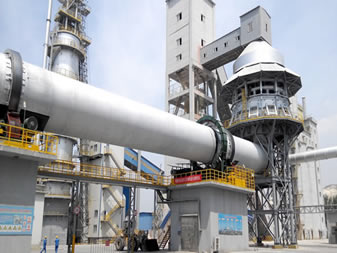
I. Composition and Process
Aggregate: Special-grade/first-grade high-alumina bauxite clinker (Al₂O₃ ≥ 75%), with partial additions of corundum or silicon carbide to enhance performance.
Binder: Phosphoric acid or aluminum dihydrogen phosphate, determining mid-temperature strength and wear resistance.
Process: Batching→Mixing→Molding→Low-temperature heat treatment at 500–600°C (non-sintering) to form a stable aluminum phosphate network structure.
II. Performance (Typical Values)
Refractoriness: ≥1,790°C.
Refractoriness Under Load (RUL): ≥1,350°C (2 kgf/cm²).
Bulk Density: 2.6–2.9 g/cm³ (standard: 2.6; special-grade: ≥2.9).
Cold Crushing Strength: ≥60 MPa, with strength increasing at mid-temperatures (800–1,200°C).
Thermal Shock Resistance: Excellent (≥30 cycles of 1,100°C water quenching).
Abrasion Resistance: Superior, with stronger mechanical erosion resistance than standard high-alumina bricks.
Chemical Resistance: Resistant to alkalis, zinc slag, and sulfur slag, suitable for complex chemical environments.
III. Applications in Rotary Kilns
Cement Rotary Kilns: Transition zones, kiln outlets, kiln hoods, tertiary air ducts, and preheater chutes (temperatures ≤1,200°C, high abrasion).
Metallurgical Rotary Kilns (Zinc/Steel Smelting):High-temperature zones (calcination zones, 1,000–1,300°C), Special-grade phosphate bricks (bulk density ≥2.9).Transition zones: Standard phosphate bricks.
Waste Incineration Rotary Kilns: Lining sections requiring abrasion and acid-alkali corrosion resistance.
IV. Advantages and Limitations
Advantages
-Strong Mid-Temperature Performance: High thermal strength (500–1,200°C), wear-resistant, and impact-resistant, with a service life 1–2 times longer than standard high-alumina bricks.
-Excellent Thermal Shock Resistance: Low-temperature sintered network structure mitigates thermal expansion/contraction, reducing spalling.
-Easy Installation: Unfired bricks eliminate high-temperature sintering, enabling rapid heating and commissioning after on-site masonry.
Limitations
-Weak High-Temperature Performance (>1,400°C): Not suitable for cement kiln burning zones (1,450°C+).
-Moderate Reducing Atmosphere Resistance: In strong reducing environments (eg, high CO concentrations), silicon carbide-composite phosphate bricks are required.
V. Selection Recommendations
Standard Conditions (Cement Transition Zones): Phosphate-bonded high-alumina wear-resistant bricks with a bulk density of 2.6–2.75 g/cm³ and Al₂O₃ ≥ 75%.
High-Temperature, High-Abrasion (Zinc Calcination Zones): Special-grade phosphate bricks or silicon-corundum phosphate bricks with a bulk density ≥2.9 g/cm³ and SiC additions for slag resistance.
Frequent Start-Stop/Thermal Cycling: Prioritize aluminum dihydrogen phosphate-bonded wear-resistant bricks for superior thermal shock resistance.
VI. Comparative Analysis with High-Alumina Bricks
Performance Parameter | Phosphate Bricks | Standard High-Alumina Bricks |
Intermediate-Temperature Strength (800–1200°C) | High (strength increases) | Moderate (strength decreases) |
Wear Resistance | Excellent | Average |
Thermal Shock Stability | Superior | Average |
Alkali Resistanc | Good | Poor |
Service Temperature Limit | ≤1,350°C | ≤1,400°C |
Service Life (Same Conditions) | Long (1–2×longer) | Short |
