
 Russian
Environmental protection is always a priority and is in line with current trends. In the lime kiln industry, how can we make kilns more environmentally friendly and energy-efficient?
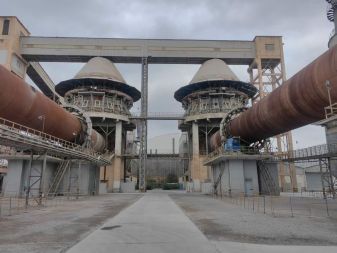
First: Material Selection. While conventional vertical kilns use standard insulation materials, energy-efficient kilns employ not only insulating bricks but also composite insulation materials combined with the kiln lining to form a composite lining. This ensures full utilization of thermal energy within the kiln, significantly reducing heat loss and coal consumption while extending the service life of the lining. The temperature at the top of a conventional vertical kiln typically ranges from 300 to 500°C, whereas in modern lime kilns, the temperature at the top is generally less than 100 to 200°C. The temperature at the top of the kiln indirectly reflects the level of fuel thermal energy utilization.
Second: Fuel is critical in a lime kiln. To achieve optimal calcination results, the distribution of limestone and fuel must be uniform across the cross-section of the kiln, which requires an ideal distributor. Modern lime kiln research institutes have designed and manufactured various types of distributors tailored to different kiln types and diameters. These include rotary distributors, three-bell probability distributors, double-bell distributors, and combined bell-rotary distributors. Larger kiln diameters typically require rotary distributors or combined bell-rotary distributors, while smaller kiln diameters can utilize double-bell or three-bell probability distributors. Kilns designed to recover carbon dioxide from flue gas at the kiln top shoulduse three-chamber probabilistic distributors, as their segmented opening and closing mechanism ensures excellent sealing performance. Therefore, the choice of distributor is closely related to energy efficiency, but it must be selected based on the specific structure of the kiln.
Third: The kiln structures differ. Traditional lime kilns are generally cylindrical, while energy-efficient kilns feature a curved, vase-shaped design with varying diameters across different sections. In a cylindrical kiln, the material descends in a static, horizontal, and steady manner, whereas in a curved, vase-shaped kiln, the material descends in a dynamic, tumbling motion. As the material rolls several times, the heating surface and air permeability are constantly altered, thereby enhancing calcination efficiency, reducing coal consumption, and lowering the rate of under- and over-calcination.
Fourth: Air Supply. Due to the unique internal structure of energy-efficient kilns, airflow resistance is minimal. Consequently, the air pressure and volume required for these kilns are only one-third of those needed for conventional vertical kilns, and the power consumption is approximately 30% of that of conventional kilns. This significantly reduces electricity consumption and, consequently, lowers the cost of lime production. The Modern Lime Kiln Research Institute has also developed a probabilistic air cap, which allows combustion air to be scientifically distributed in layers across the required cross-section of the kiln charge. This ensures uniform airflow and consistent flame intensity within the kiln. The air supply design philosophy for modern lime kilns is: “low air pressure, low air volume, high efficiency.”
Fifth: Ash discharge systems also play a role in energy conservation. Modern lime kiln research facilities are typically equipped with a combination of a tray-type ash discharger and a two-stage discharge valve, which ensures effective ash discharge while reducing power consumption. Furthermore, to reduce capital investment, a simple flip-grate ash discharger has been designed; its cost is only one-tenth that of an electric ash discharger, and it can usually be fabricated on-site during construction, resulting in very low costs.
Overall, lime kilns achieve energy conservation and environmental protection through the five aspects outlined above.
